
Licenses
Community Screening License (Buddhist Centre / Community)
Community Screening License
(Buddhist Centre / Community)
Bring the film to your Buddhist Centre or nonprofit organization and create a meaningful event for your community. It’s a wonderful way to connect with people, share an inspiring story, and spark conversation.
The screening could be organized in person or online, for example via Zoom.
The financial arrangement is based on a simple 50/50 split of gross ticket sales, before any deductions, in a spirit of fairness and mutual support.
If you’d like to host a screening, please email chenrezigfilm@gmail.com with:
● A brief description of your community
● The venue
● Expected audience size
● Your preferred screening date
● Whether you would like Malgorzata Ola Dobrowolska, the director, to join online for a Q&A session
Within 3 days after acceptance of your application, you will receive:
● Ready-to-use promotional materials (digital posters, film description, and photos)
● A screening license
● A downloadable copy of the film (MP4 file, English version)
Related products
-
Educational Public Performance and Digital Streaming License (University / School / Public Library)
Select options This product has multiple variants. The options may be chosen on the product page
Malgorzata –
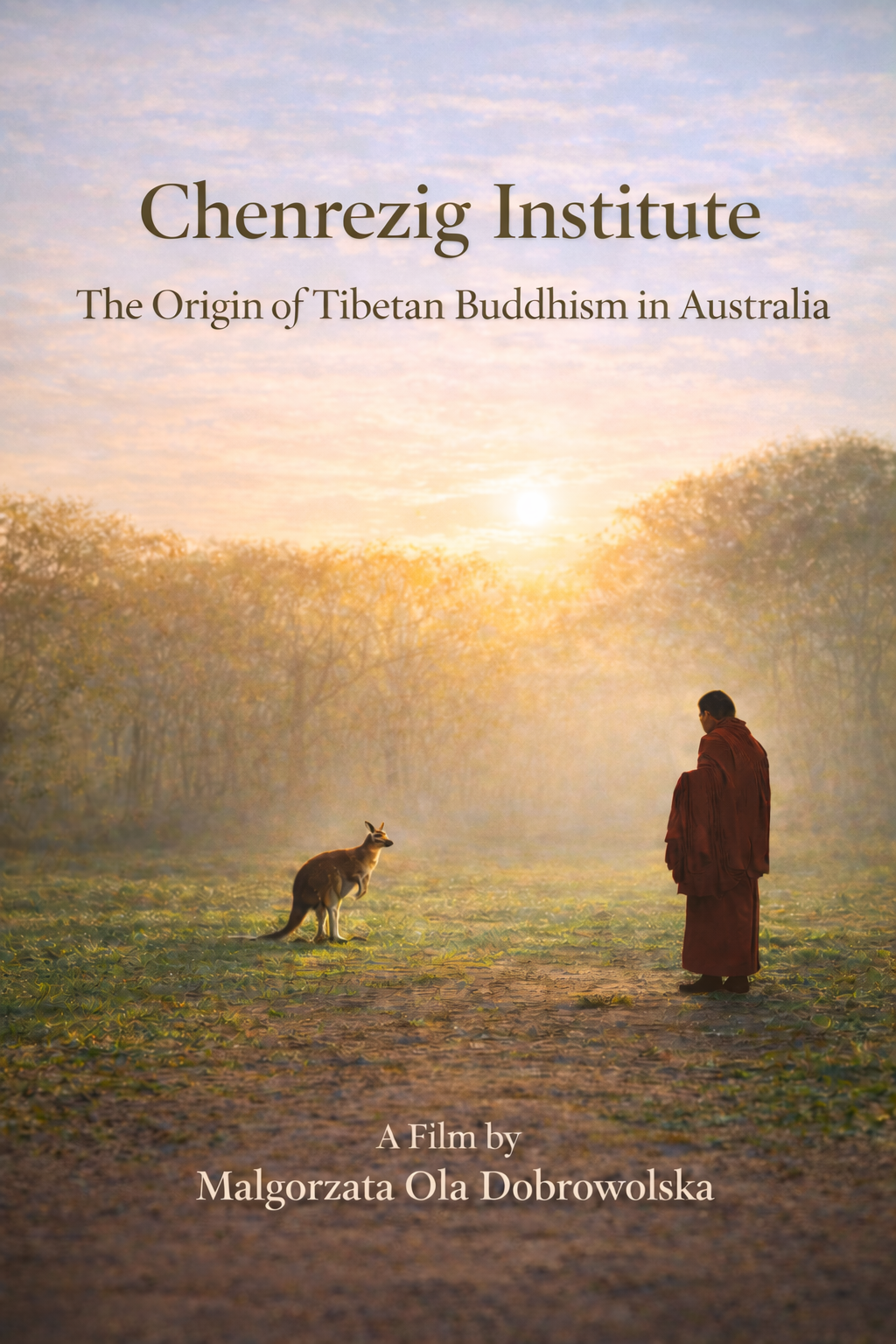
“We had the pleasure of sharing the Premiere Film Screening “Chenrezig Institute: The Origin of Tibetan Buddhism in Australia”, made by independent filmmaker Małgorzata Ola Dobrowolska. Hosted in the Gompa, over 70 people came to see the new documentary projected on the big screen.
Joined by the director via Zoom from Poland, Malgo was able to welcome people to the event and share her genuine tears of joy after the screening. It was very moving to see the documentary in the heart of the place on which it is based.
A wonderful window into the history of Chenrezig Institute, the film features stories from community members involved since its inception, archival images of the founders, Lama Thubten Yeshe and Lama Zopa Rinpoche, as well as many magical moments along the journey. With more recent footage taken by Malgo, she skilfully edited together some of the many nuances that make Chenrezig Institute what it is today.
Congratulations, Małgorzata Ola Dobrowolska, on the wonderful film you have made. Wishing you every success in getting the message of compassion out to the world. ❤️ ”
Featured in the Chenrezig Institute Newsletter
Claudio Kindler –
Very touching and inspiring
Wayne Tinlin –
I saw this invaluable historical gem in May 2025 at Perth’s Hayagriva Buddhist Centre. It masterfully captures the organic, grassroots birth of Tibetan Buddhism in the West. I was especially moved by the story of the 1970s hippie movement and the young, dedicated seekers who, driven by a profound hunger for spirituality, built the institute from scratch without financial incentive. The film beautifully illustrates the uniting of causes, conditions, and karma that allowed the global FPMT network to spring into existence from such humble beginnings.
A central highlight of the film is its powerful portrayal of the institute’s founding lamas, Lama Yeshe and Lama Zopa Rinpoche. The production does an excellent job of honouring their vision, courage, and transformative guidance, noting that the archival footage vividly conveys their immense presence and spiritual power. Furthermore, the film excels in its holistic storytelling by tracing the journey all the way back to Kopan Monastery and filtering it through the joyful, loving voices of the pioneers who were actually there.
Another big tick is the documentary’s inclusion of local history and the vital roles played by women and First Nations culture. It was refreshing to see the immense influence of strong women, such as Anila Ann, Mummy Max, and Zina, highlighted alongside the foundational role nuns played in establishing the institute. Additionally, the inclusion of Aboriginal Elder Aunty Bridgette Chilly Davis—who shares the sacred First Nations women’s history of the land and its female water spirits—added a fascinating, nurturing layer of depth that profoundly impacted me.
From a technical and artistic standpoint, the film should be lauded for its professional production values, exceptional editing, and great music. Director Małgorzata Ola Dobrowolska managed to achieve a refined, calm balance that tackled complex themes—such as past gender inequalities and community difficulties—with gentle, refreshing honesty rather than turning the film into a rigid manifesto. The documentary is a captivating, professional, and deeply inspiring work that holds the viewer’s interest from the first frame to the last.